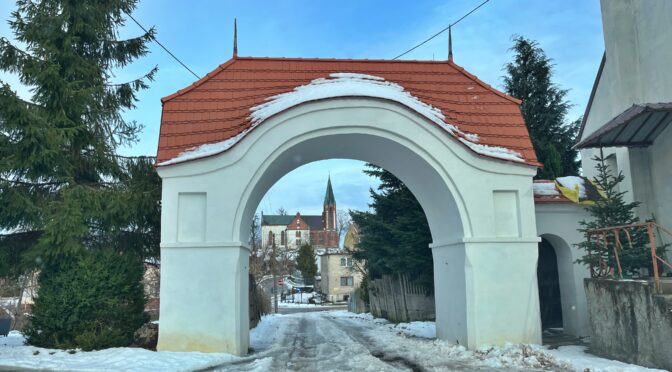
| Historia Główczyc (Glovcicz, Glovectz, Glovezit, Glovicze, Glonitze, Główczëce, Glonitz) sięga wczesnego średniowiecza. Pierwsza wzmianka o wsi w dokumentach pochodzi z XIII w. i wspomina o niej jako dobrach rycerskich wskazując ówczesnego właściciela: “Ratislaus miles de Glovectz“.
Z 1475 r. pochodzi pierwsza wzmianka o nowych właścicielach wsi – rodzie von Puttkamer. W ich rękach wieś pozostanie do końca II wojny światowej (1945 r.). Wieś była miejscem koegzystencji Niemców i Kaszubów. Wzmianki z XIX w. zawierają informacje o kazaniach w kościele, które pastorzy wygłaszali także w języku kaszubskim. W XIX w. wieś miała charakter małego miasteczka. Oprócz rolników, mieszkali tam na stałe rzemieślnicy, kupcy i przedstawiciele wolnych zawodów. Działały dwie drużyny sportowe, odbywały się maskowe bale karnawałowe, widowiska teatralne i koncerty muzyki. Rosyjskie wojska weszły do wsi 7 maja 1945 r. Rozpoczęły od ostrzału artyleryjskiego. Pomimo zapewnienia ze strony przedstawiciela mieszkańców, że wieś poddaje się i nie będzie stawiać żadnego oporu, Rosjanie – jak podaje kronika miasto – rozstrzelali kilkudziesięciu mężczyzn oraz zgwałcili wiele kobiet i dziewcząt. Po wyjściu Rosjan, wieś przejęli Polacy. Protestancki kościół przejęli katolicy. Od 60 lat posługę duszpasterską pełnią w świątyni salezjanie. |
The history of Główczyce (Glovcicz, Glovectz, Glovezit, Glovicze, Glonitze, Główczëce, Glonitz) dates back to the early Middle Ages. The first mention of the village in documents comes from the 13th century and mentions it as a feudal estate, indicating the then owner: “Ratislaus miles de Glovectz”.
The first mention of the new owners of the village – the von Puttkamer family – comes from 1475. The village would remain in their hands until the end of World War II (1945). The village was a place of coexistence for Germans, Polish and Kashubians. References from the 19th century contain information about sermons in the church, which pastors also delivered in Kashubian language. In the 19th century, the village had the character of a small town. In addition to farmers, craftsmen, merchants, also a few lawyers and doctors lived there permanently. There were two sports teams, there were carnival masked balls, theater performances and music concerts. Russian troops entered the village on May 7, 1945. They began with artillery fire. Despite the assurance from the residents’ representative that the village was surrendering and would not put up any resistance, the Russians – according to the city’s chronicle – shot several dozen men and raped many women and girls. After the Russians left, the village was officially taken over by the Poles. The Protestant church was taken over by Catholics. Salesians have been providing pastoral service in the temple for 60 years. |
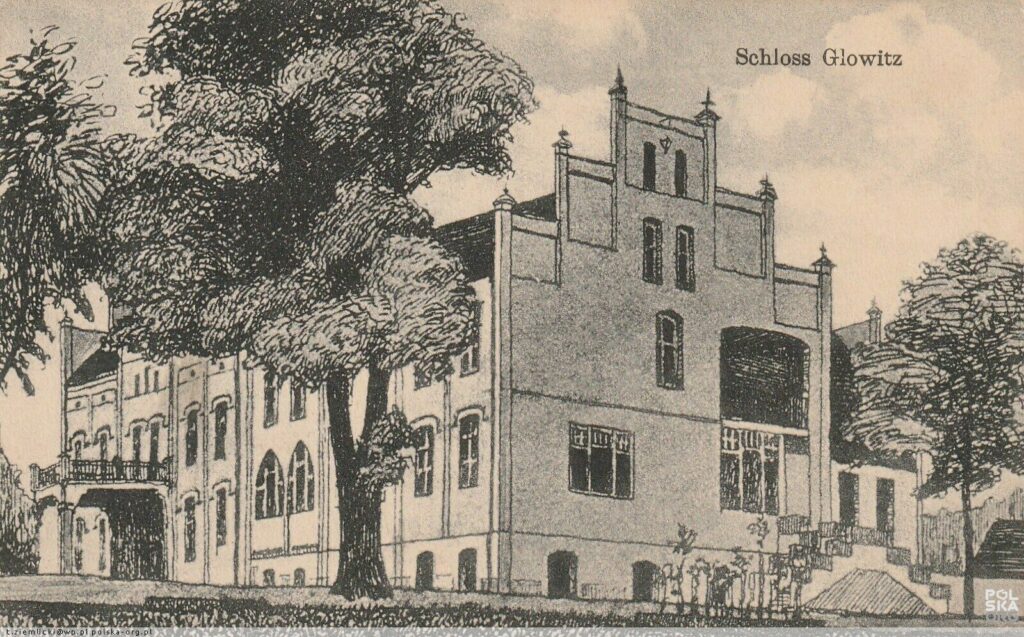
| Główczyce kilkukrotnie padały ofiarą pożarów. W 1874 r. rozszalały pożar strawił sporą część zabudowy wsi. Odbudowa trwała ponad 3 lata.
W 1889 r. nadeszła kolejna tragedia – spłonął zabytkowy kościół z XVII/XVIII w. Listę niszczycielskich pożarów w historii miasta zamyka tragedia, która miała miejsce w nocy z 24 na 25 marca 2020 r. Wówczas ogień zniszczył zgrabny neogotycki pałacyk Puttkamerów. Zabytkowe wyposażenie (w tym stiuki, stolarka schodowa i okienna, piece kaflowe oraz zabudowa biblioteki z herbami Puttkamerów), które przetrwało obie wojny światowe i czasy PRL – strawił ogień lub rozkradli złodzieje – jak w przypadku kutego herbu Puttkamerów na balustradzie balkonowej pałacu. |
Główczyce was destroyed by fire several times. In 1874, a raging fire destroyed a large part of the village’s buildings. The reconstruction took over 3 years.
In 1889, another tragedy occurred – a historic church from the 17th/18th century burned down. The list of destructive fires in the history of the city ends with the tragedy that took place on the night of March 24-25, 2020. Then the fire destroyed the neat neo-Gothic palace of the Puttkamer family. Historic furnishings (including stucco, staircase and window joinery, tiled fireplaces and a library cabinets with Puttkamer coats of arms), which survived both world wars and the times of the communist regime in Poland – were consumed by fire or stolen by thieves – as in the case of the forged Puttkamer coat of arms on the balcony railing of the palace. |
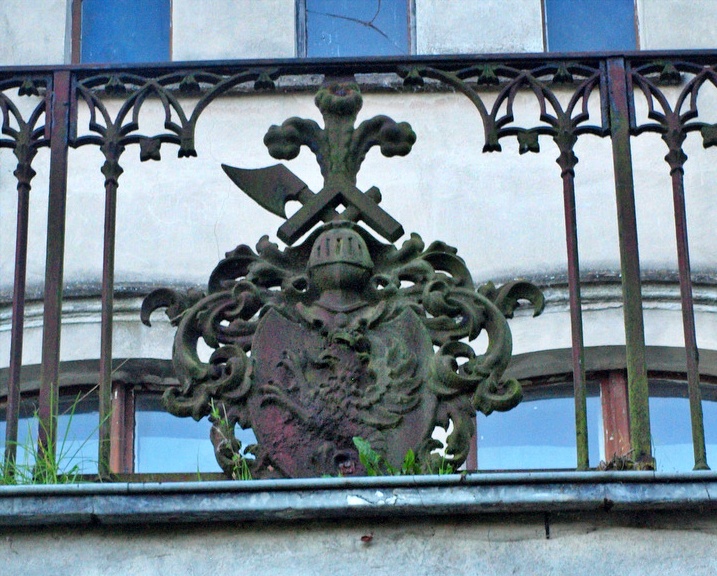
| Herb rodu von Puttkamer – właścicieli pałacu do 1945 r. Stan sprzed pożaru w 2000 r. | Coat of arms of the von Puttkamer family – owners of the palace until 1945. Condition before the fire in 2000. |
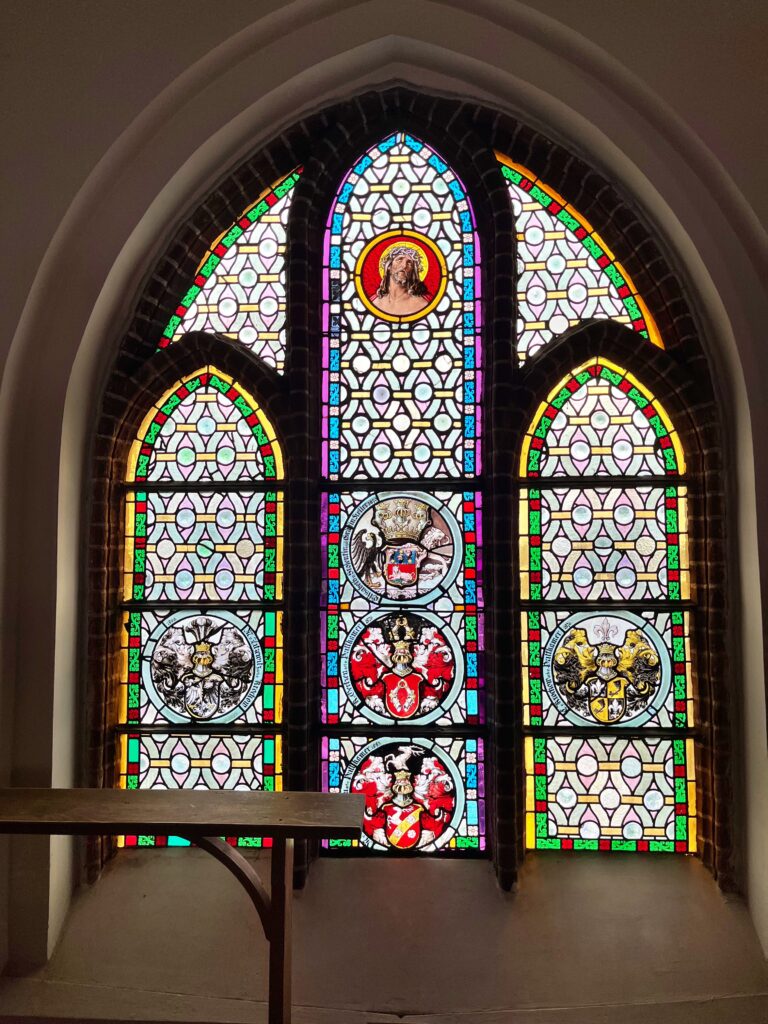
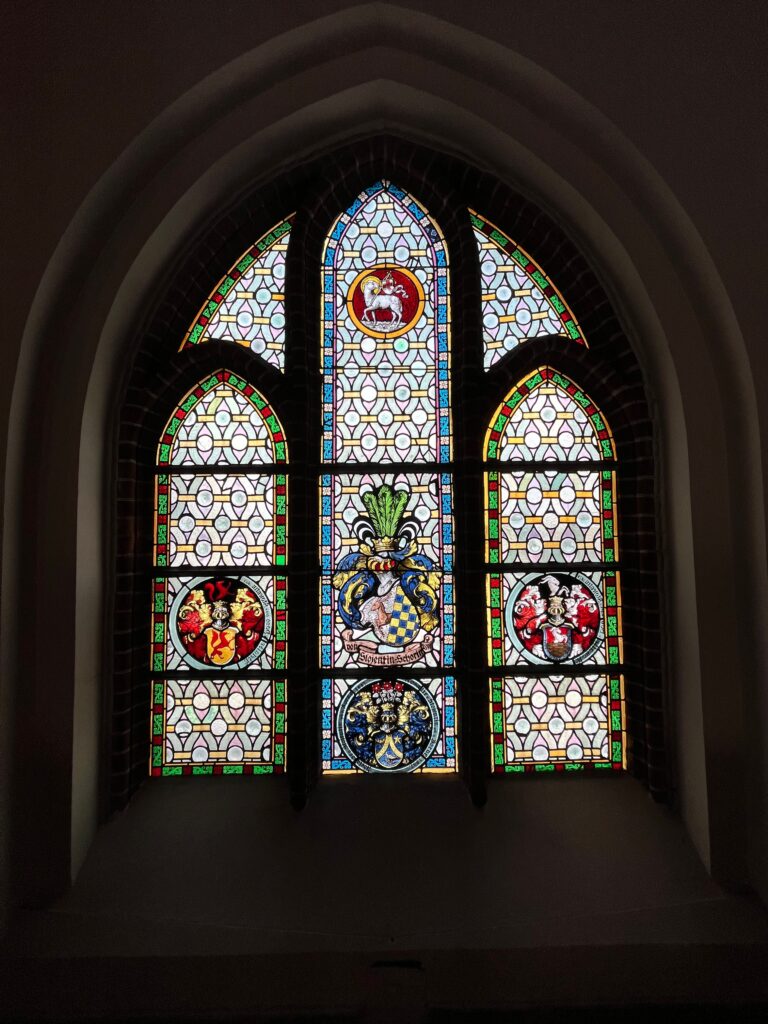
| W tej sytuacji ogromnie cieszy fakt, że w miejscowym kościele przetrwały bezcenne zabytki heraldyki szlacheckiej – witraże z herbami pomorskich rodzin szlacheckich, dawnych właścicieli okolicznych majątków: hrabiów von Keller, baronów von Prittwitz und Gaffron, rodów: von Zitzewitz, von Oertzen, von Lieres und Wilkau, von Krockow, von Puttkamer, von Blankensee-Zipkow, von Voss, von Bonin, von Gaudecker, von Stojentin-Schorin, von Dorne. | In this situation, it is great that priceless monuments of nobility heraldry – stained glass windows – have survived in the local church with the coats of arms of Pomeranian noble families, former owners of nearby estates: counts von Keller, barons von Prittwitz and Gaffron, families: von Zitzewitz, von Oertzen, von Lieres and Wilkau, von Krockow, von Puttkamer, von Blankensee-Zipkow, von Voss, von Bonin, von Gaudecker, von Stojentin-Schorin, von Dorne. |
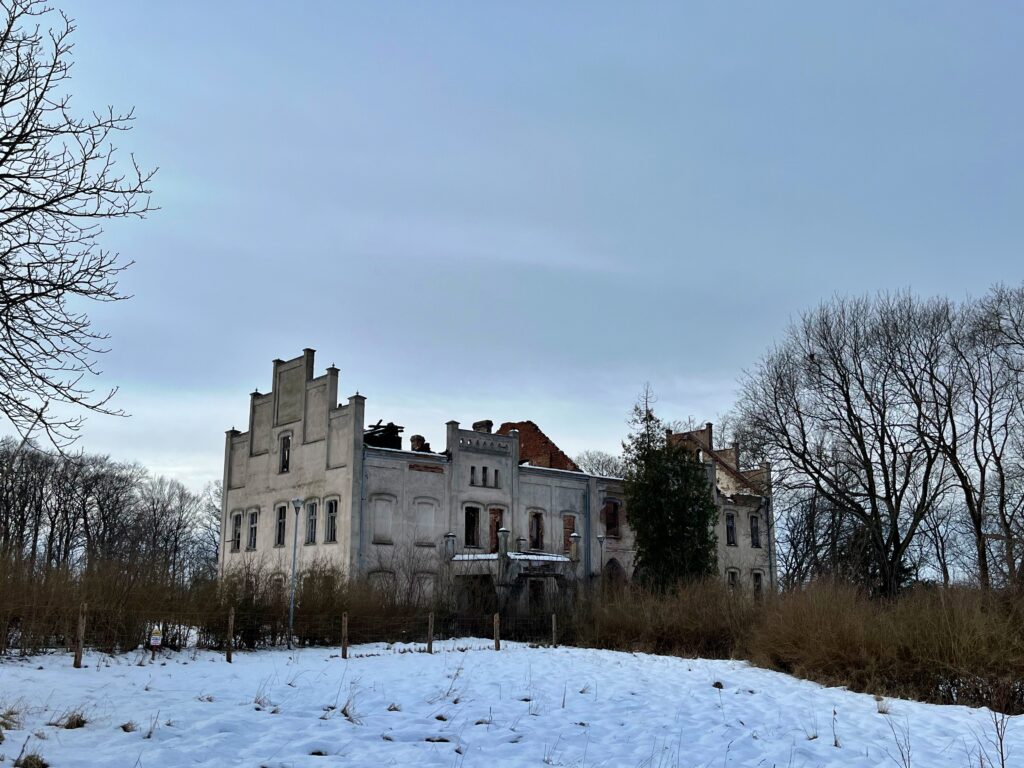
| Pałac w Główczycach po pożarze. Stan z 2024 r. | Palace in Główczyce after the fire. As of 2024. |
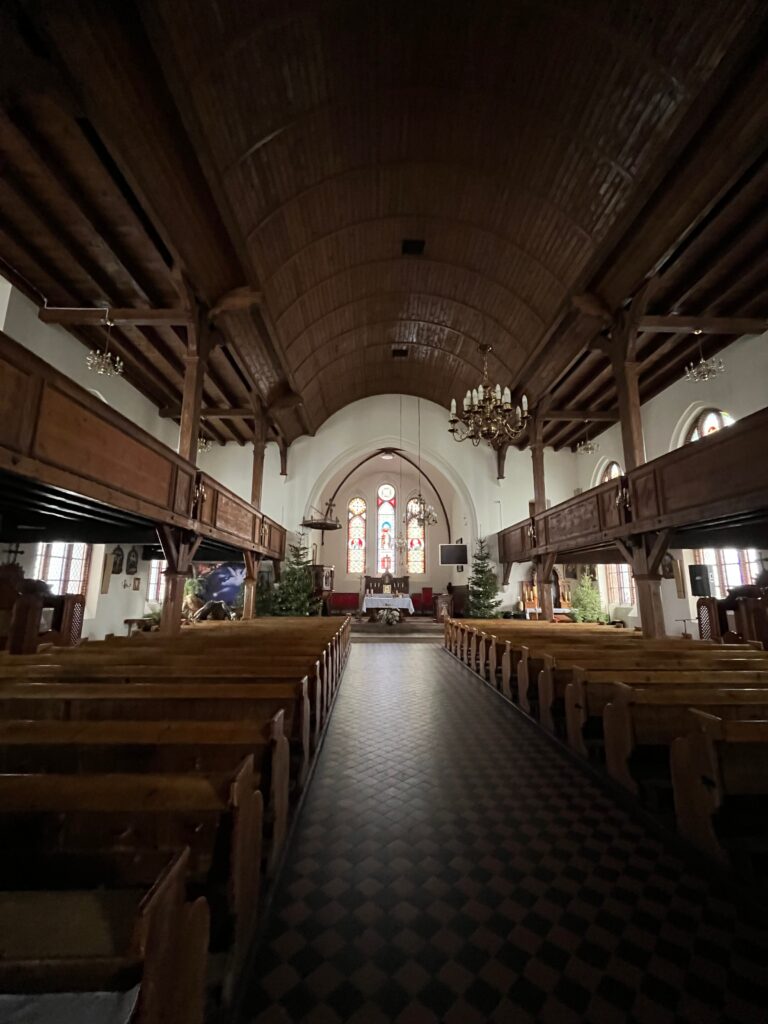
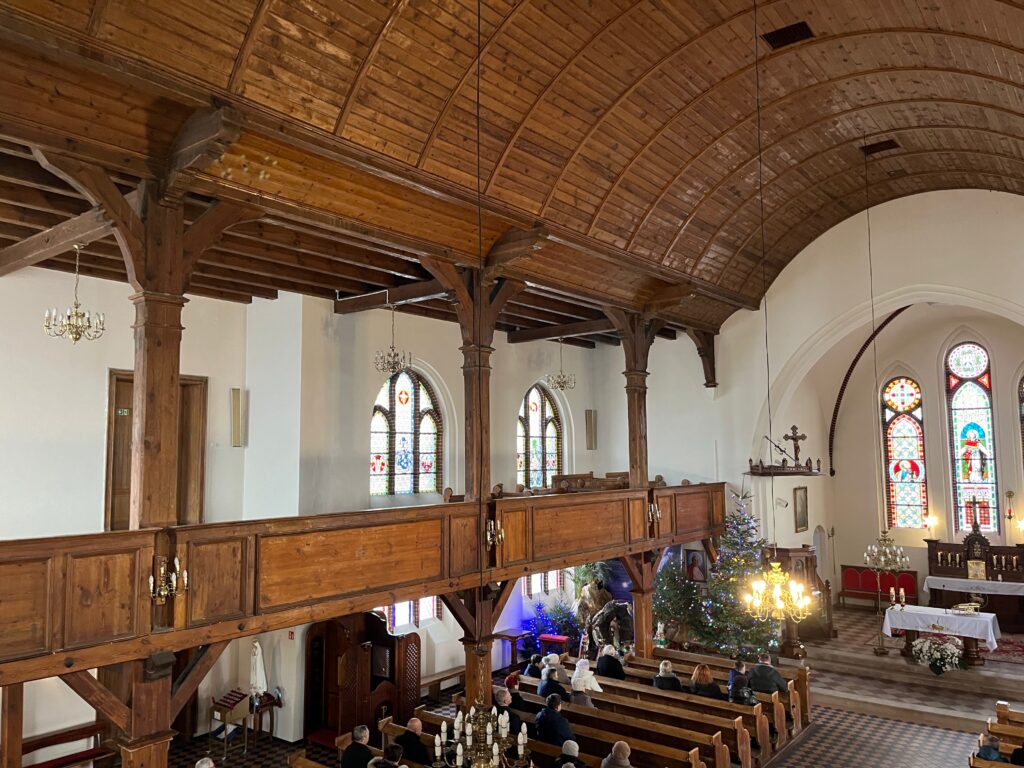
| Herbów nie sposób dostrzec z poziomu parteru świątyni (pewnie również dlatego przetrwały?). Aby móc je podziwiać trzeba wejść na jedną z dwóch galerii na piętrze, do których prowadzą osobne schody. | The coats of arms cannot be seen from the ground floor of the temple (probably that is also why they survived?). To admire them, one needs to enter one of the two galleries on the first floor, which are accessed by separate stairs. |
|
Witraże przedstawiają zapewne herby rodów zamieszkujących teren parafii Główczyce. Pierwsza próba rozszyfrowania programu heraldycznego główczyckich witraży doprowadziła mnie do wniosku, że mogą to być herby patronów – członków rady parafialnej, z których część wymienia kronika miasta określając liczbę głosów, którą dysponowali w czasie decydowania o sprawach parafii. Daty w opaskach wokół wizerunków pochodzą częściowo z okresu sprzed pożaru, a więc na pewno nie są to daty wstawienia /ufundowania witraża. Ciekawostką jest fakt, że większość to herby mężatek. Może data na witrażach z herbami mężatek to rok zawarcia związku małżeńskiego? Ta zagadka czeka wciąż na wyjaśnienie. Tymczasem zapraszam do obejrzenia zdjęć, które udało mi się wykonać dzięki uprzejmości miejscowych księży. Heraldyka główczyckich witraży to przykład stylizowanej na neogotyk, świetnej heraldyki niemieckiej, która nastała w drugiej połowie XIX wieku w odpowiedzi na ówczesną krańcowo zdegenerowaną heraldykę europejską. Wizerunki prezentują bardzo wysoki poziom sztuki i rzemiosła artystycznego, a także heraldyki. Zabytki heraldyczne są w północnej części Polski nieliczne. Heraldyka na tak wysokim poziomie w wiejskim kościele z drugiej połowy XIX wieku to prawdziwa rzadkość. Pod zdjęciami zawarłem informacje na temat rozszyfrowanych napisów oraz kilka szczegółów na temat każdego z rodów, których herby ozdobiły główczyckie witraże. Jest tam niemało ciekawostek. Liczę, że to dopiero początek detektywistycznej przygody. Zachęcam wszystkich Czytelników do udziału i do kontynuacji tego małego śledztwa. |
The stained glass windows probably depict the coats of arms of noble families living in the Główczyce parish. The first attempt to decipher the heraldic program of the Główczyce stained glass windows led me to the conclusion that they may be the coats of arms of patrons – members of the parish council, some of whom are mentioned in the city chronicle specifying the number of votes they had when deciding on parish matters. The dates in the bands around the images partly come from the period before the fire, so they are certainly not the dates when the stained glass window was installed/founded. An interesting fact is that most of them are the coats of arms of married women. Maybe the date on the stained glass windows with the coats of arms of married women is the year of their marriage? This mystery is still waiting to be solved. In the meantime, please take a look at the photos I managed to take thanks to the courtesy of local priests. The heraldry of the Główczyce stained glass windows is an example of great German heraldry styled in neo-Gothic style, which appeared in the second half of the 19th century in response to the extremely degenerate European heraldry of that time. The images represent a very high level of art and craftsmanship, as well as heraldry. Heraldic monuments are few in northern Poland. Heraldry at such a high level in a village church from the second half of the 19th century is a real rarity. Under the photos, I included information about the deciphered inscriptions and a few details about each of the families whose coats of arms decorated the stained glass windows in Główczyce. There are a lot of interesting facts there. I hope this is just the beginning of a detective adventure. I encourage all readers to participate and continue this small investigation. |
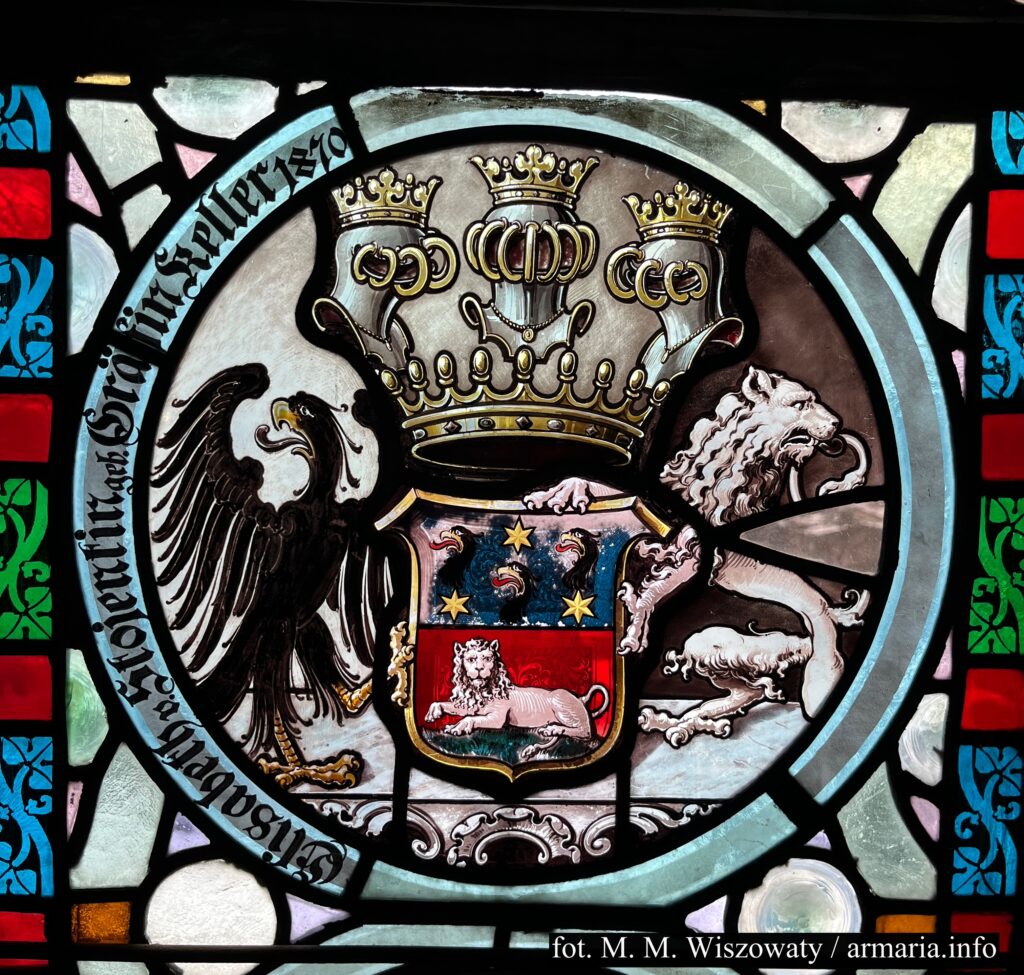
| Herb szwabskiej rodziny von Keller w wersji hrabiowskiej. Rodzina służyła książętom Wirtembergii i Saxe-Gotha-Altenburg, carom Rosji, królom Prus i królom Saksonii (tutaj: herb Elżbiety von Stojentin, de domo hrabianki Keller (1870)). | The coat of arms of the Swabian von Keller family in the count’s version. The family served the Dukes of Württemberg and Saxe-Gotha-Altenburg, the Tsars of Russia, the Kings of Prussia and the Kings of Saxony (here: coat of arms of Elizabeth von Stojentin, de domo Countess Keller (1870)). |
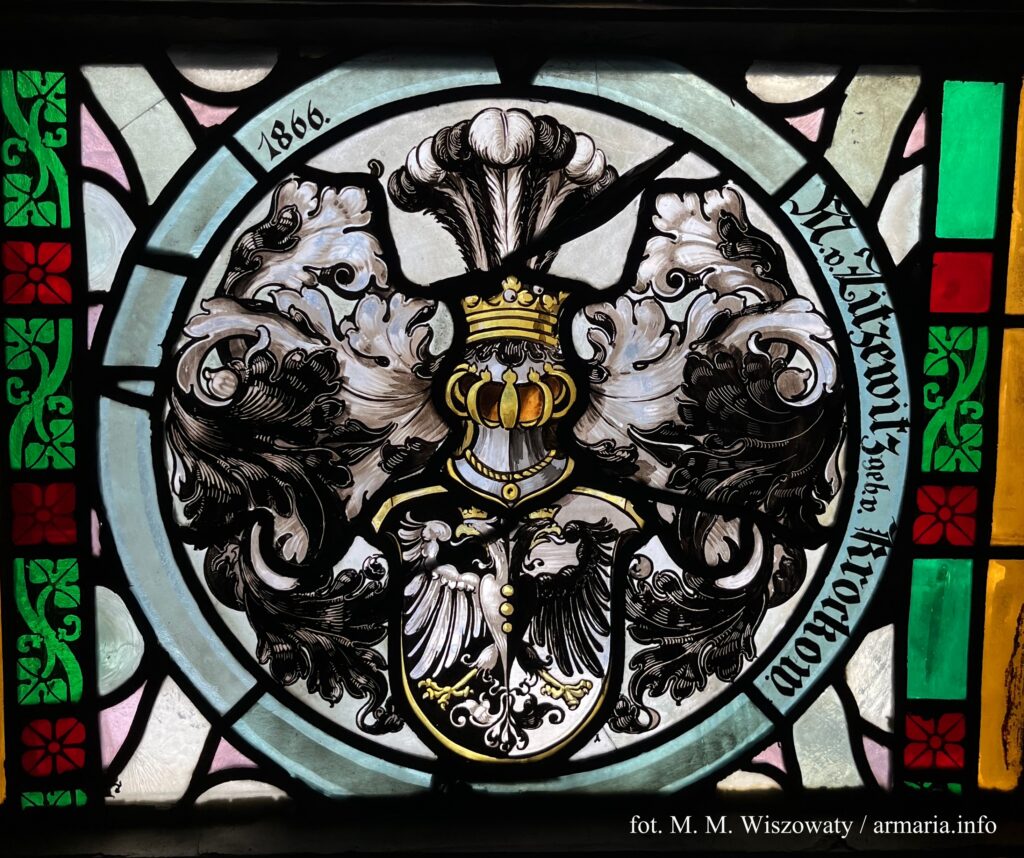
| Herb pomorskiego rodu von Zitzewitz wywodzącego się z Meklemburgii, którego udokumentowana historia sięga XII w. Od XIV w. osiedli w Cecenowie koło Słupska. Tutaj: herb pani M. von Zitzewitz de domo von Krockow (1866 r.) | The coat of arms of the Pomeranian von Zitzewitz family, originating from Mecklenburg, whose documented history dates back to the 12th century. From the 14th century, they settled in Zitzewitz (nowadays: Cecenowo) near Stolp (nowadays: Słupsk). Here: coat of arms of Mrs. M. von Zitzewitz de domo von Krockow (1866) |
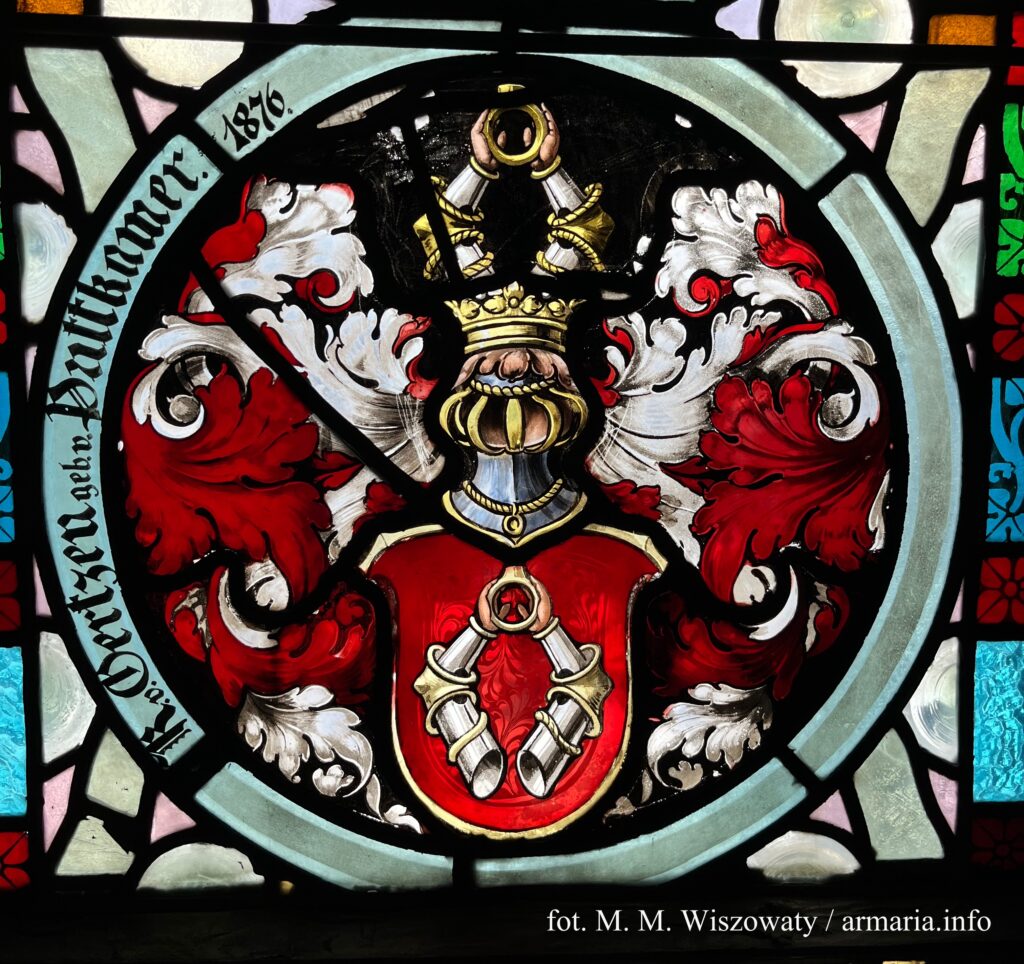
| Herb rodu von Oertzen – szlachty meklemburskiej o słowiańskich korzeniach. Tutaj herb pani K. von Oertzen z domu von Krockow. Data: 1876 | Coat of arms of the von Oertzen family – Mecklenburg nobility with Slavic roots. Here is the coat of arms of Mrs. K. von Oertzen née von Krockow. Date: 1876 |
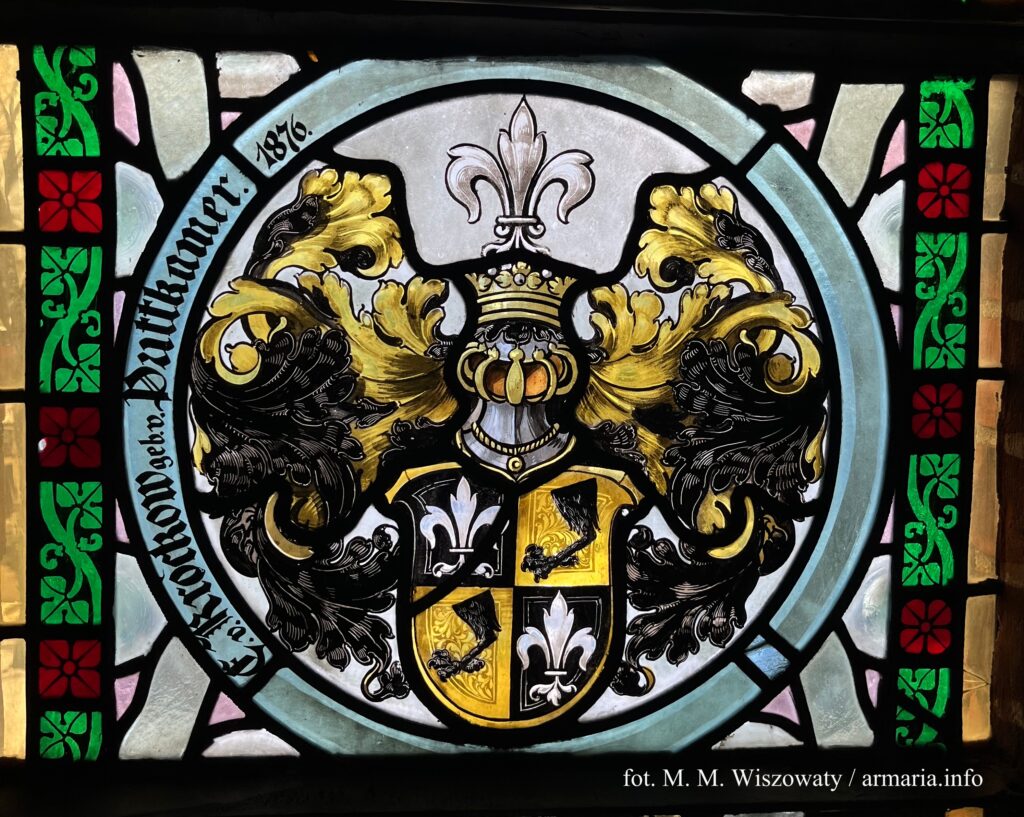
| Herb pomorskiego rodu von Krockow w wersji nadanej wraz ze szlachectwem Ottonowi Augustowi Ernstowi Ludwigowi von Krockow (1812-1885), nieślubnemu synowi hrabiego Ernsta Augusta von Krockow z Karżniczki (1774-1816). Co ciekawe, potomkowie Augusta dziedziczyli dobra na Śląsku. Tutaj herb pani E. von Krockow z domu von Puttkamer. Data: 1876 r. | Coat of arms of the Pomeranian von Krockow family in the version granted with nobility to Otto August Ernst Ludwig von Krockow (1812 – 1885), the illegitimate son of Count Ernst August von Krockow of Karżniczka (1774 – 1816). Interestingly, Augustus’s descendants inherited estates in Silesia. Here is the coat of arms of Mrs. E. von Krockow née von Puttkamer. Date: 1876 |
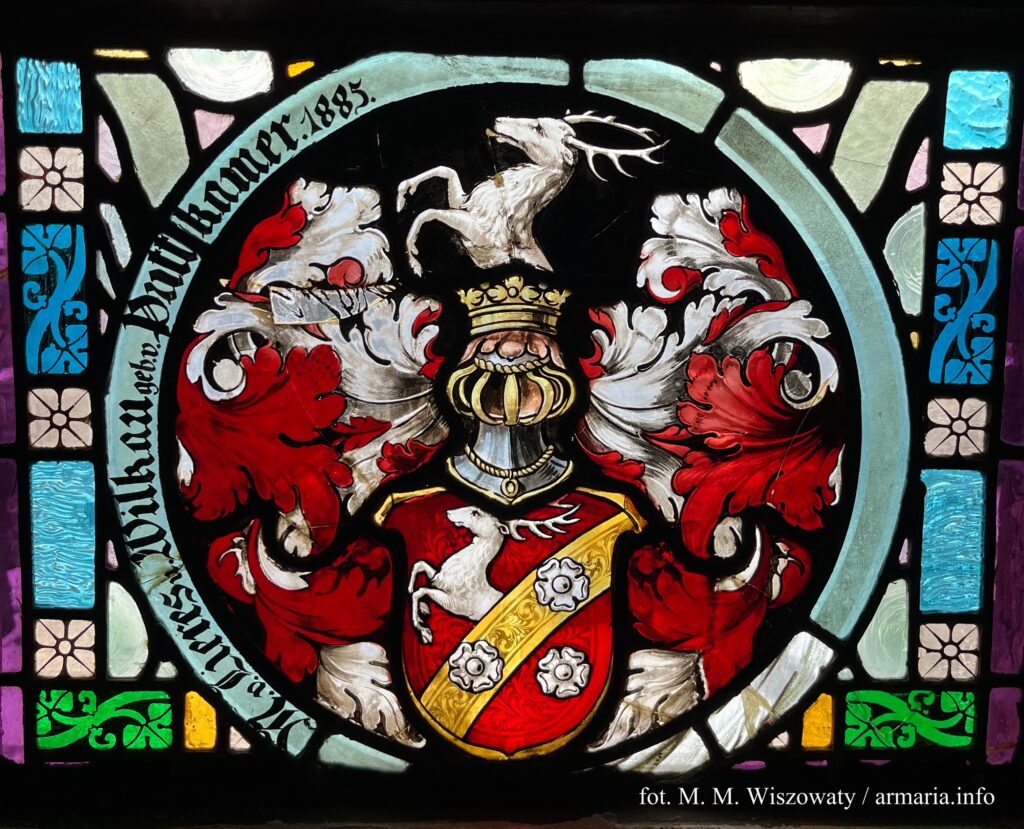
| Herb wywodzącego się ze Śląska rodu von Lieres und Wilkau. W 1744 r. rodzina została podniesiona do rangi dziedzicznej szlachty pruskiej. Tutaj herb pani M. von Lieres und Wilkau, z domu von Puttkamer (data: 1885) | Coat of arms of the von Lieres und Wilkau family originating from Silesia. In 1744, the family was raised to the rank of hereditary Prussian nobility. Here is the coat of arms of Mrs. M. von Lieres und Wilkau, née von Puttkamer (date: 1885) |
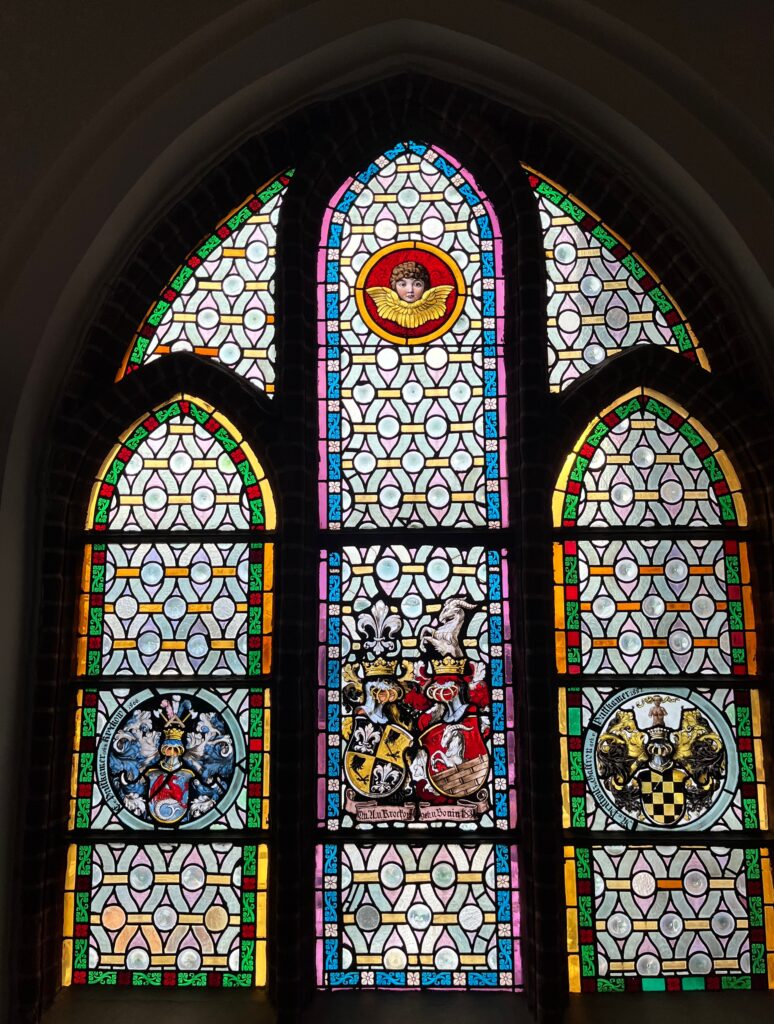
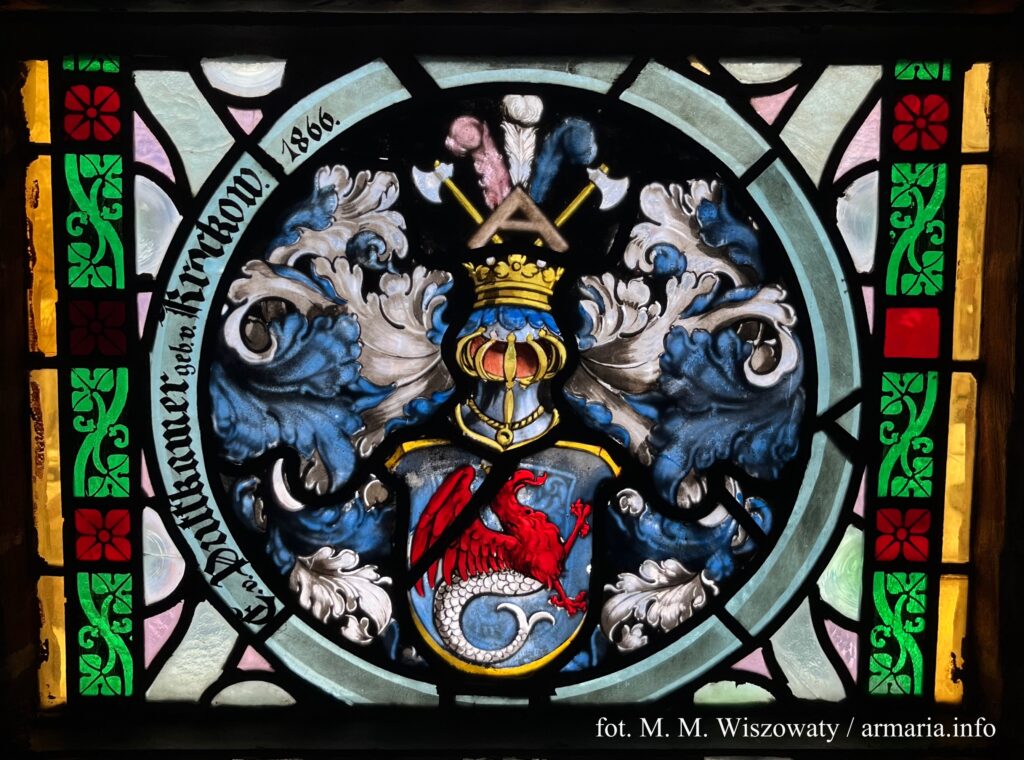
| Herb zachodniopomorskiego rodu von Puttkamer o słowiańskich korzeniach. Puttkamer to słowiańskie słowo odpowiadającego polskiemu “podkomorzemu”. Tutaj: pani E. von Puttkamer z domu von Krockow. Data: 1866. | Coat of arms of the West Pomeranian von Puttkamer family with Slavic roots. Puttkamer is a Slavic word corresponding to the Polish “podkomorzy” (chamberlain). Here: Mrs. E. von Puttkamer née von Krockow. Date: 1866. |
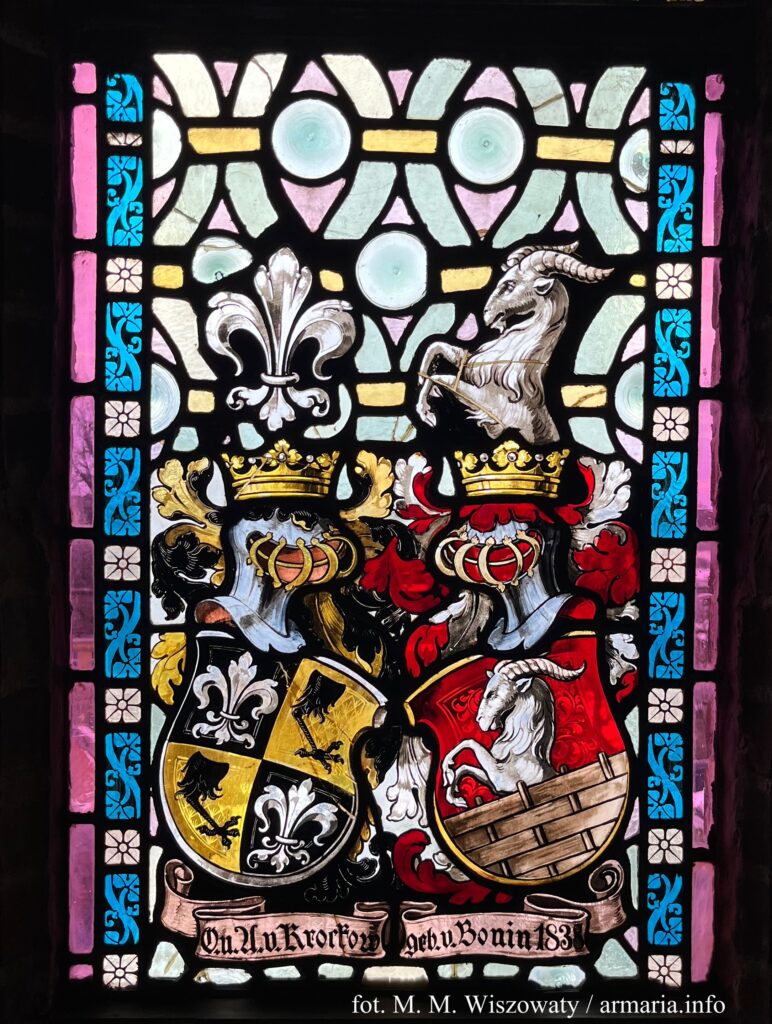
| Herby małżeńskie w ukłonie heraldycznym. Napis na banderoli podpowiada, że chodzi o małżonków O. i U. von Krockow. Żona wywodzi się z rodu von Bonin (jej herb znajduje się po heraldycznie lewej stronie) – rody szlacheckiego wywodzącego z zachodniego Pomorza, osiadłego na południe od Koszalina. | Marriage coats of arms in a heraldic bow. The inscription on the banderole suggests that these are the spouses O. and U. von Krockow. The wife comes from the von Bonin family (her coat of arms is on the heraldically left side) – a noble family from Western Pomerania, settled south of Koszalin. |
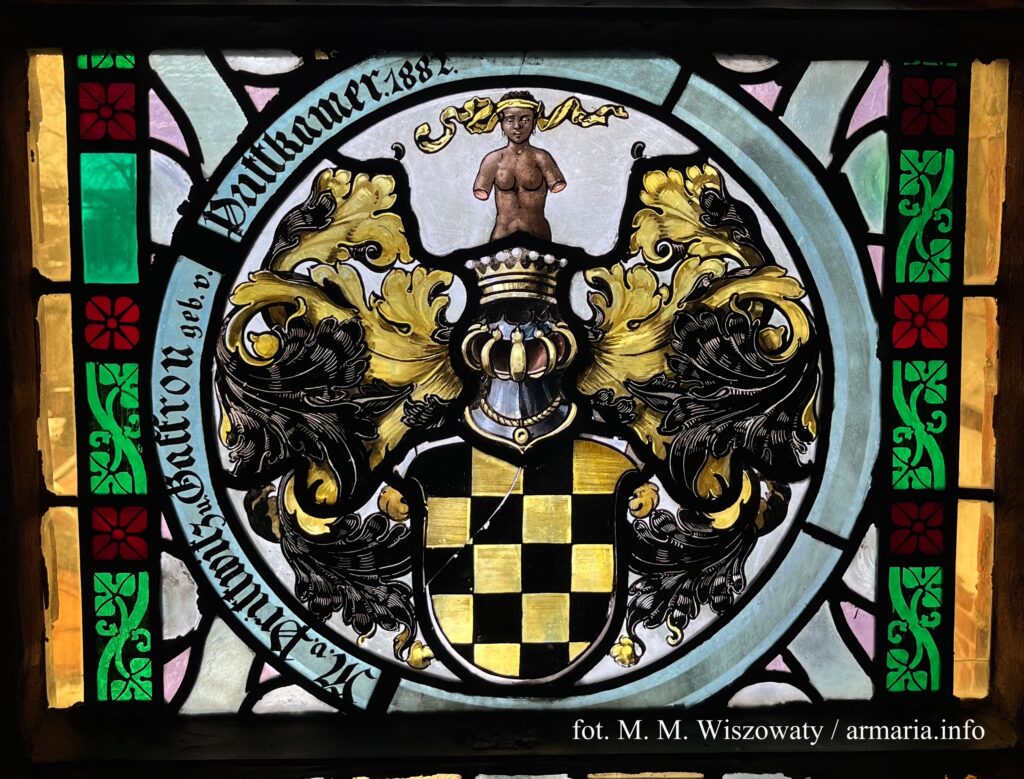
| Herb rodu von Prittwitz und Gaffron – szlachty wywodzącej się ze Śląska, ale (zgodnie z legendą) posiadającej słowiańskiej korzenie. Protoplasta miał go otrzymać za zwycięstwo w partii szachów. Członkowie rodu z różnych gałęzi służyli ostatnim Jagiellonom, królom Czech i Prus. Herb na witrażu ma formę baronowską. Dziedziczny tytuł barona czeskiego uzyskał w 1732 r. Leonhard Adolph von Prittwitz z tytułem “Edler von Graffon”. Forma nazwiska “von Prittwitz und Graffon” została zatwierdzona przez Heroldię Pruską dopiero w 1882 r. Na witrażu herb pani M. von Prittwitz und Graffon z domu von Puttkamer. Data: 1882. | The coat of arms of the von Prittwitz und Gaffron family – nobility originating from Silesia, but (according to legend) having Slavic roots. The progenitor was supposed to receive it for winning a game of chess. Members of the family from various branches served the last Polish kings from the Jagiellonian dynasty, the kings of Bohemia and Prussia. The coat of arms in the stained glass window is in the rank of a baron. The hereditary title of Czech baron was obtained in 1732 by Leonhard Adolph von Prittwitz with the title “Edler von Graffon”. The form of the surname “von Prittwitz und Graffon” was approved by the Prussian Heraldry Office only in 1882. There is the coat of arms of Mrs. M. von Prittwitz und Graffon née von Puttkamer is on the stained glass window. Date: 1882. |
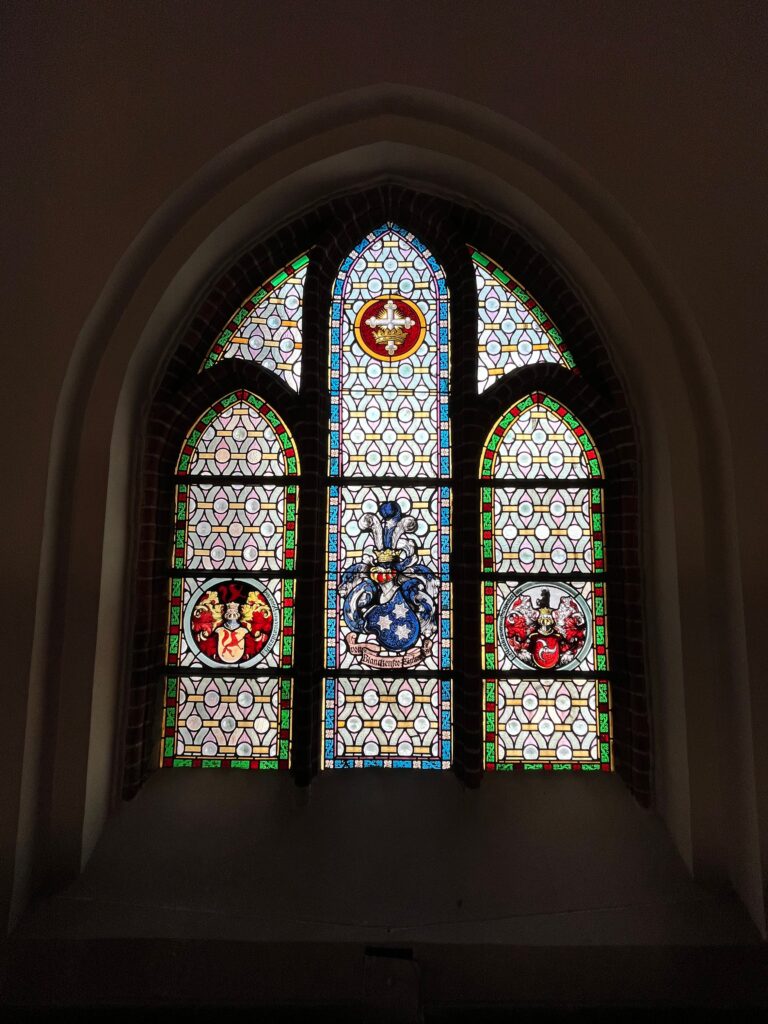
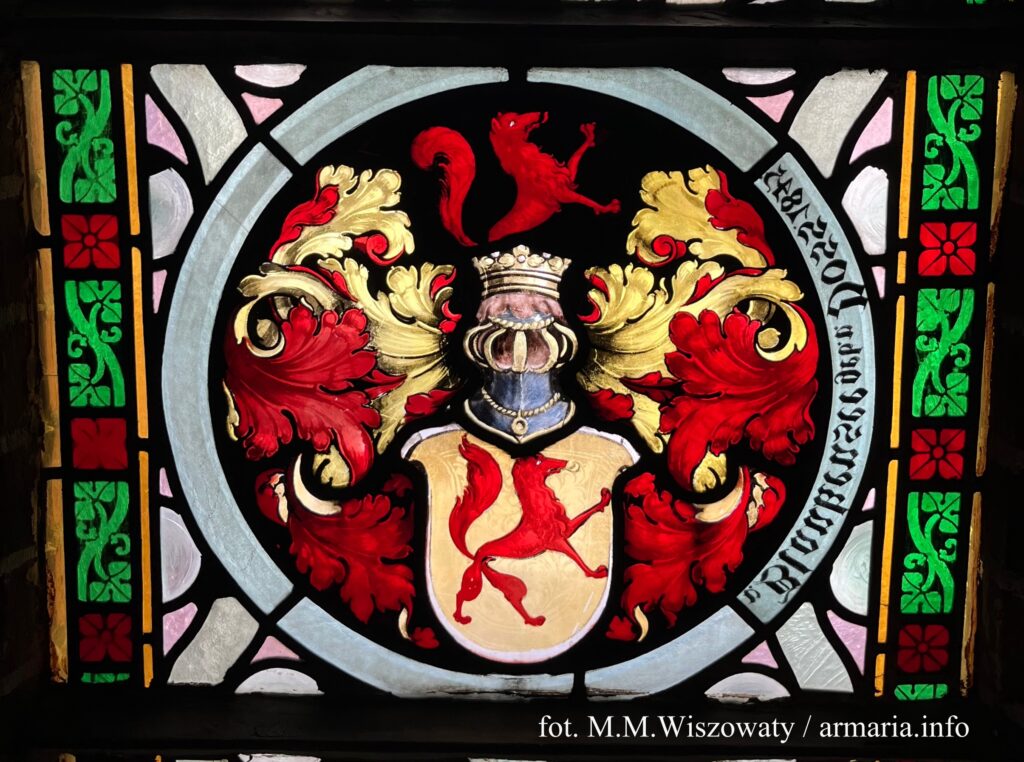
| Herb pani von Blankensee z domu von Voss. Data 1845. W tarczy herb rodu wywodzącego się z Meklemburgii rodu rycerskiego von Voss notowanego w dokumentach od 1253 r. Co ciekawe, herb został wstawiony w formie odwróconej, co widać po kierunku liter, ale także po odwróconym godle herbu – lis powinien być skierowany w heraldyczną prawą stronę. Kolejna ciekawostka: Voss to herb mówiący. Protoplasta rodu, Jan, doradca księcia rostockiego Mikołaja I, nosił przydomek Vulpes czyli lis. Z czasem łaciński vulpes zmienił się w dolnomieckie: foss/voss i tak utrwaliło się nazwisko rodziny. Tutaj wersja szlachecka herbu. Ród von Voss miał także gałąź arystokratyczną, jedną z najbogatszych rodzin Pomorza Zachodniego. | Coat of arms of Mrs. von Blankensee née von Voss. Date 1845. In the shield is the coat of arms of the Mecklenburg-based von Voss knightly family, recorded in documents since 1253. Interestingly, the coat of arms was inserted in an inverted form, which can be seen by the direction of the letters, but also by the inverted emblem of the coat of arms – the fox should be directed towards heraldic right side. Another interesting fact: Voss is a counting coat of arms. The progenitor of the family, John, advisor to Nicholas I, Duke of Rostock, was nicknamed Vulpes, meaning fox. Over time, the Latin vulpes changed into the Low German: foss/voss and this is how the family surname became established. Here is the noble version of the coat of arms. The von Voss family also had an aristocratic branch, one of the richest families in Western Pomerania. |
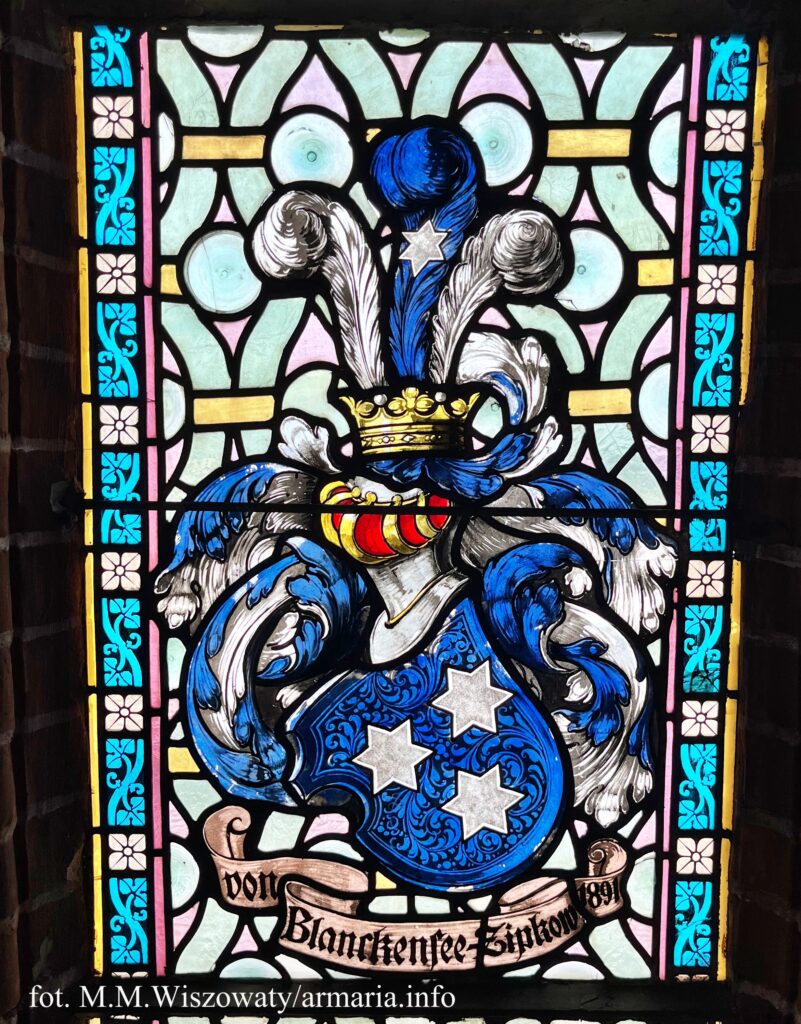
| Herb rodu von Blankensee-Zipkow. Wersja męska. Wywodzący się z Nowej Marchii (Brandeburgia) ród rycerski został odnotowany po raz pierwszy w 1234 r. Zipkow to dzisiaj Szczypkowice w powiecie słupskim. Jedna z gałęzi rodu von Blankensee nabyła wieś w początkach XIX w. i odtąd pisała się jako von Blankensee-Zipkow. | Coat of arms of the von Blankensee-Zipkow family. Men’s version. The knightly family, originating from New March (Brandeburg), was first recorded in 1234. Today, Zipkow is Szczypkowice in Słupsk County. One of the branches of the von Blankensee family acquired the village in the early 19th century and from then on called itself von Blankensee-Zipkow. |
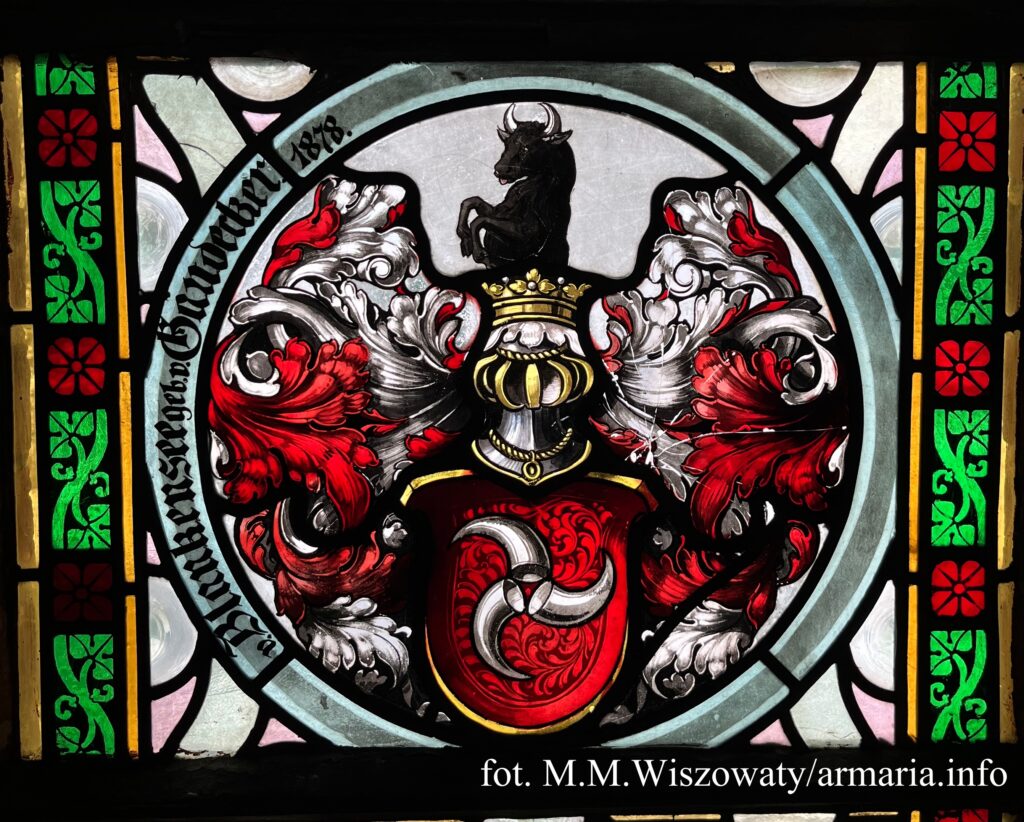
| Witraż przedstawia herb panieński pani von Blankensee z domu von Gaudecker. Data 1878. Ród von Gaudecker wywodzi się z Pomorza. Pierwsza wzmianka o rodzie pochodzi z roku 1255. Potem zdobyli majątki na terenie Pomorza Zachodniego i Prus Królewskich na terenach leżących dzisiaj częściowo w Niemczech, Polsce i Rosji. | The stained glass window shows the maiden coat of arms of Mrs. von Blankensee née von Gaudecker. Date 1878. The von Gaudecker family comes from Pomerania. The first mention of the family comes from 1255. Then they acquired estates in Western Pomerania and Royal Prussia in areas that today lie partly in Germany, Poland and Russia. |
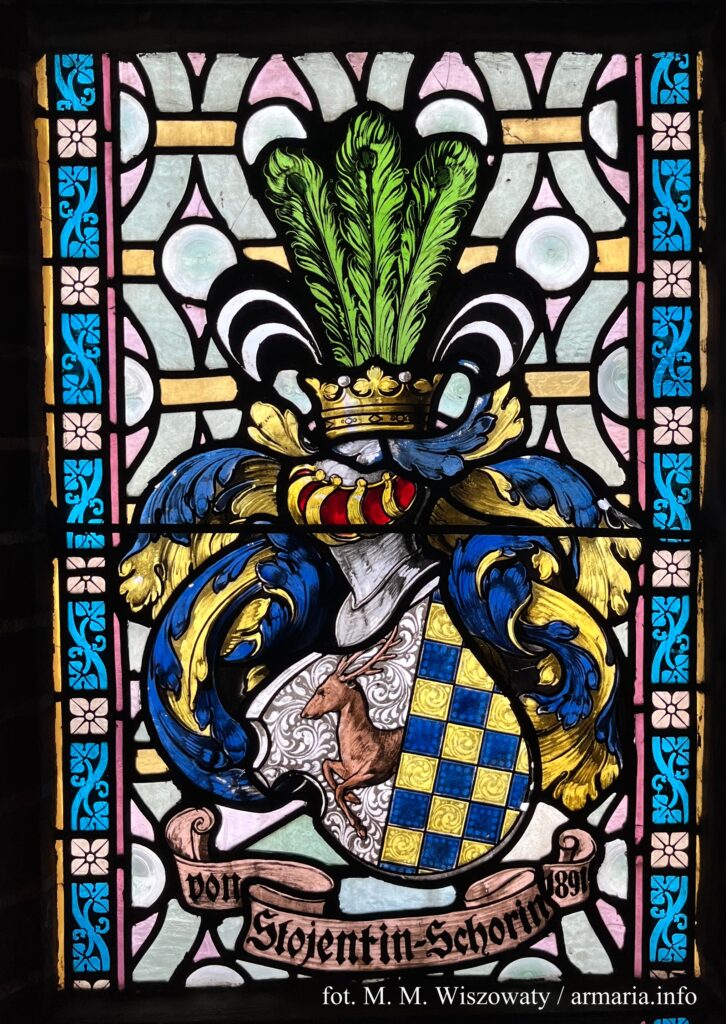
| Herb zachodniopomorskiego szlacheckiego rodu von Stojentin-Schorin. Data: 1891. Ród von Stojentin jest notowany po raz pierwszy w 1341 r. w Słupsku. Posiadał na Pomorzu Zachodnim liczne majątki, w tym Schorin (dzisiaj Skórzyno) w bliskim sąsiedztwie Główczyc. | Coat of arms of the West Pomeranian noble family von Stojentin-Schorin. Date: 1891. The von Stojentin family was first recorded in 1341 in Stolp/Słupsk. He owned numerous estates in Western Pomerania, including Schorin (today Skórzyno) in the close vicinity of Główczyce. |
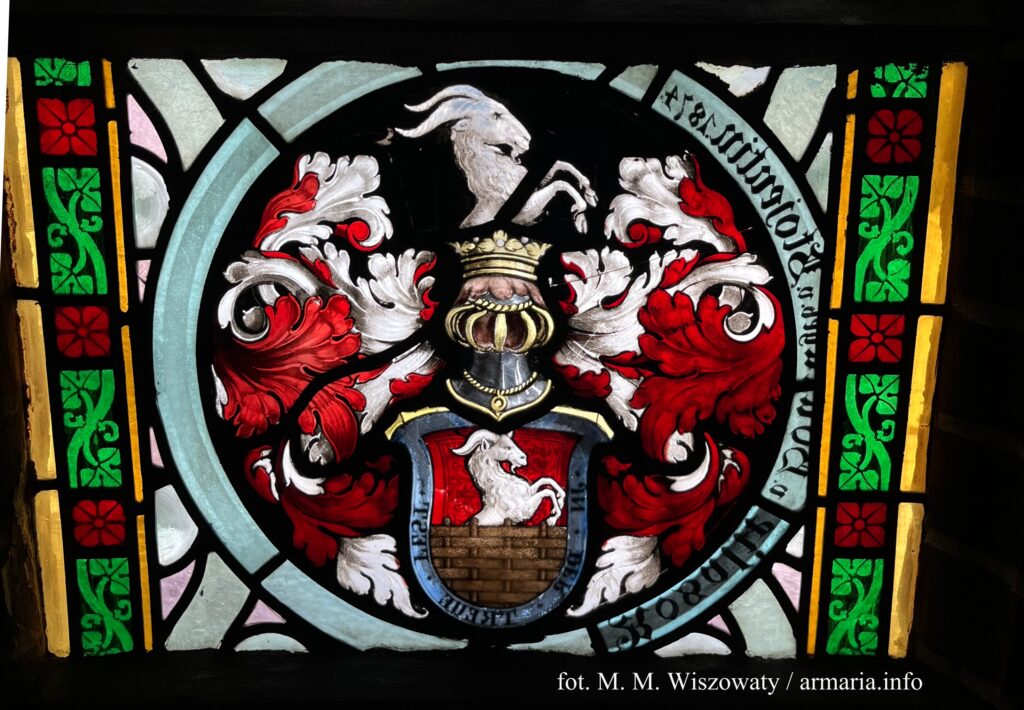
| Ponownie herb rodu von Bonin. Tym razem z dewizą rodową: „In der Treue fest“ czyli “Pozostań wierny”.
Tutaj herb Rozalii von Bonin z domu Stojentin. Data 1874 r. Pełne imię pozwala nam ustalić więcej szczegółów na temat pani Rozalii. Wyszła za Aleksa von Bonin, któremu wniosła w posagu majątek Skórzyno (Schorin). Skórzyno pozostało w rękach rodu von Bonin do 1945 r. Do dzisiaj przetrwał we wsi pałac zbudowany w 1870 r. Po raz kolejny herb jest odwrotnie wstawiony. |
The coat of arms of the von Bonin family again. This time with the family motto: “In der Treue fest” or “Stay faithful”.
Here is the coat of arms of Rozalia von Bonin née Stojentin. Date 1874. The full name allows us to determine more details about Mrs. Rozalia. She married Alex von Bonin, to whom she brought the Skórzyno (Schorin) estate as a dowry. Skórzyno remained in the hands of the von Bonin family until 1945. A palace built in 1870 has survived in the village to this day. Once again, the coat of arms is reversed. |
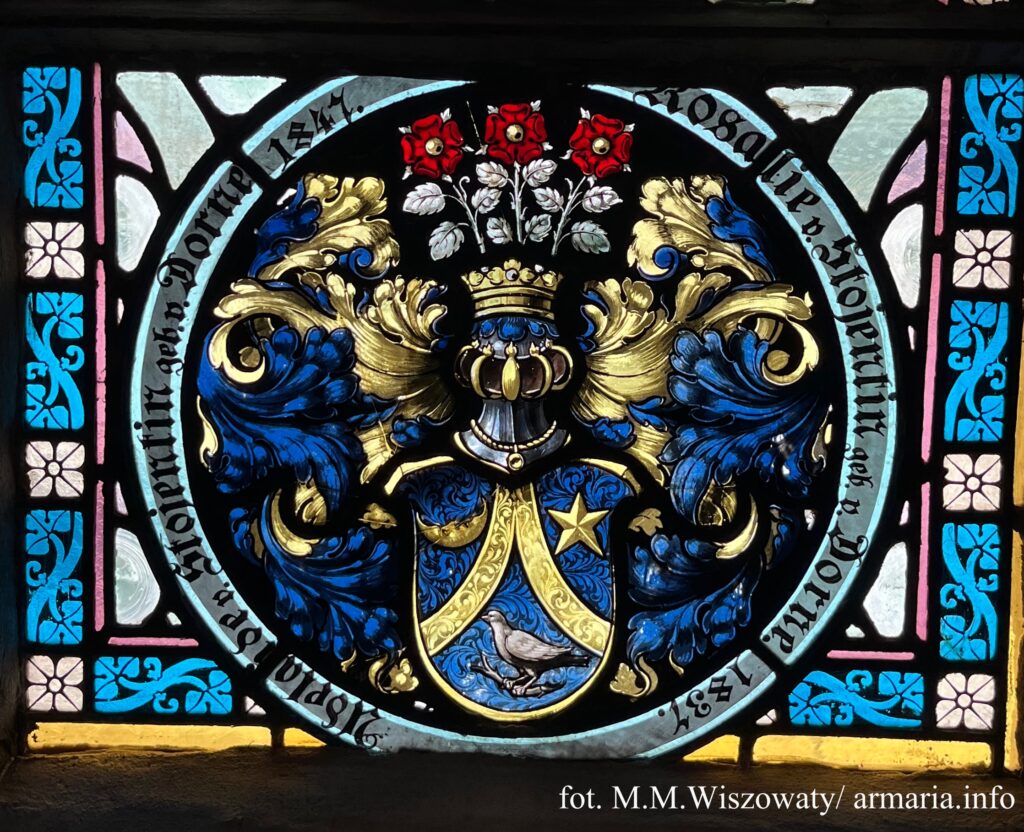
| Kolejna ciekawostka. Herb rodu von Dorne ze wzmiankami dotyczącymi dwóch kobiet. Obie z domu von Dorne, a po mężach – von Stojentin. Przy Adelajdzie data 1847, przy Rozalii – 1837. Być może chodzi o dwie siostry? A może dwie siostry, które wyszły za dwóch braci von Stojentin? Ród von Dorne to także ciekawostka. Pierwotnie – kupcy z okolic Bremy. Decyzja o wyjeździe do Lubeki w XIV w. była doskonałym pomysłem. Rodzina weszła w skład patrycjatu tego zamożnego, hanzeatyckiego miasta. Ukoronowaniem kariery była nobilitacja i wejście w skład ziemiańskiej szlachty meklemburskiej w 1740 r. Niestety, ród wygasł w linii męskiej w 1859 r. | Another curiosity. Coat of arms of the von Dorne family with mentions of two women. Both née von Dorne, and after their husbands – von Stojentin. In the case of Adelaide the date is 1847, in the case of Rozalia – 1837. Perhaps it is about two sisters? Or maybe two sisters who married two von Stojentin brothers? The von Dorne family is also a curiosity. Originally – merchants from the Bremen area. The decision to go to Lübeck in 14th century was a great idea. The family became part of the patriciate of this wealthy Hanseatic city. The crowning achievement of their career was the ennoblement and entry into the Mecklenburg landowning nobility in 1740. Unfortunately, the family died out in the male line in 1859. |
Literatura:
- Julius Theodor Bagmihl, Pommersches Wappenbuch, Stettin 1843-1855
- Juliusz Ostrowski, Księga herbowa rodów polskich (z. 1-19), Warszawa 1897-1906.
- Karl-Heinz Pagel, Glowitz [in:] Der Landkreis Stolp in Pommern. Lübeck 1989
- Przesiedlona młodość. Wspomnienia mieszkańców gminy Główczyce, Główczyce 2013.