Once again, by a happy accident, an extraordinary book has fallen into my hands. An extract, published by The Times as part of the promotion for its forthcoming release, was enough: having read that brief sample, I ordered the book in advance without further hesitation. A few days ago, I finished reading this substantial volume of 656 pages.
Every lover of books knows that peculiar feeling of emptiness which follows the final line of a truly absorbing read. It does not happen often, for one does not often come across a book capable of drawing one almost entirely into its world. Eleanor Doughty’s “Heirs & Graces. A History of the Modern British Aristocracy” is unquestionably such a work.
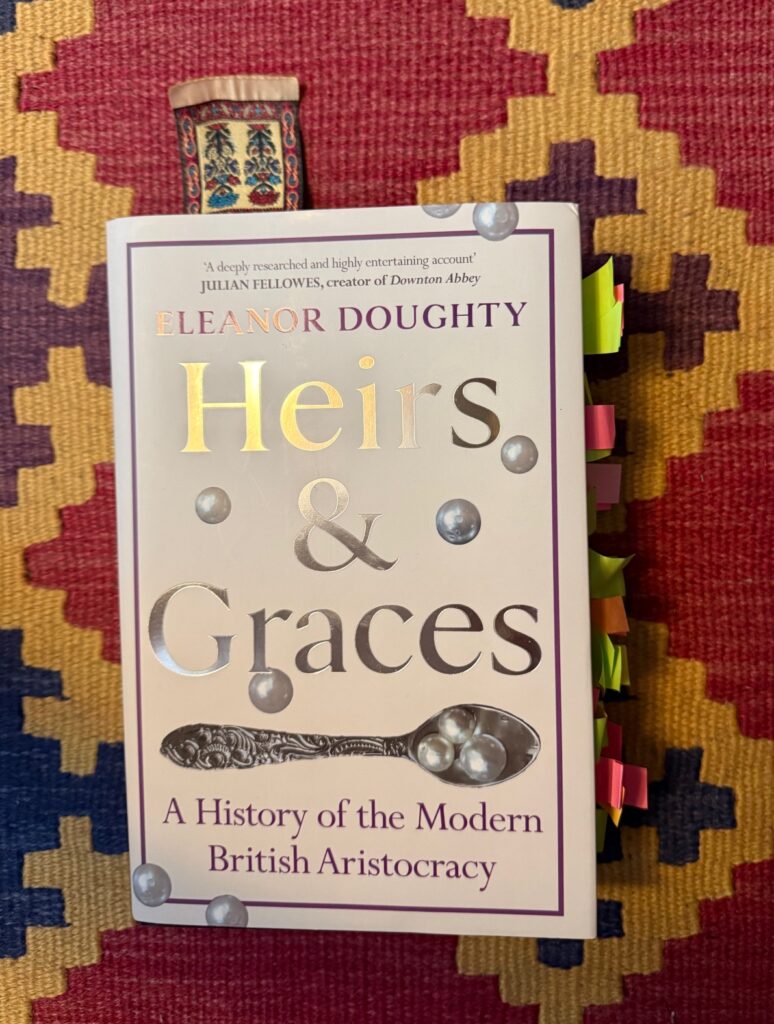
The author, a young British journalist, born in 1992, has written the “Great Estates” column for The Telegraph since 2017. She has also contributed to numerous publications, including The Daily Telegraph, The Sunday Telegraph, Financial Times, The Spectator, Country Life, The Times, The Sunday Times, Tatler, The Field, The Critic, The Week, The Oldie, and others.
She specialises in the British aristocracy and landed gentry, the rural economy, and stately and country houses and their owners. She is also a consultant to the prestigious Debrett’s Peerage.
In an article for Tatler, Doughty explains that the aristocracy became her particular field of interest by a fortunate coincidence. During the first Covid-19 lockdown, she was reading literature on country houses and concluded that what was missing was a new book not so much about the architecture or economics of those estates, but about the people who live in them: dukes, duchesses, lords, and ladies. She cites David Cannadine’s The Decline and Fall of the British Aristocracy, published in 1990, as her inspiration. In her view, Cannadine had left a considerable field for further exploration. The author of that monumental book, 814 pages long, himself acknowledged that it was highly scholarly and therefore difficult for the general reader. It contains almost no reference to the lived realities of the group it describes, nor to their personal experiences.
Over the course of twelve years, Eleanor Doughty visited more than 150 aristocratic country houses and interviewed their owners. She wrote hundreds of paper letters requesting permission to visit and speak with them. The replies were generally favourable; most interviewees agreed to be quoted under their real names, and many agreed to several conversations. The result is a highly detailed portrait of a unique social group whose existence, and above all whose real life, is known to few beyond its own members. Thanks to the author’s immense labour in press and archival research, but above all thanks to her meetings and conversations with living people – often remarkably candid ones – we come to know the everyday and ceremonial life of the British nobility and aristocracy: their problems, challenges, grievances, the advantages and disadvantages of the lives they lead, their interests, and their choices in education, professional careers, leisure, and marriage. It is a fascinating journey which, thanks to the author’s literary gifts, we ourselves seem to join, often feeling as though we were accompanying her on her travels and in her conversations. As the publisher neatly puts it, this is a book about the aristocracy: “who they are and how they tick”.
The chronological threshold of the book is the beginning of the twentieth century.
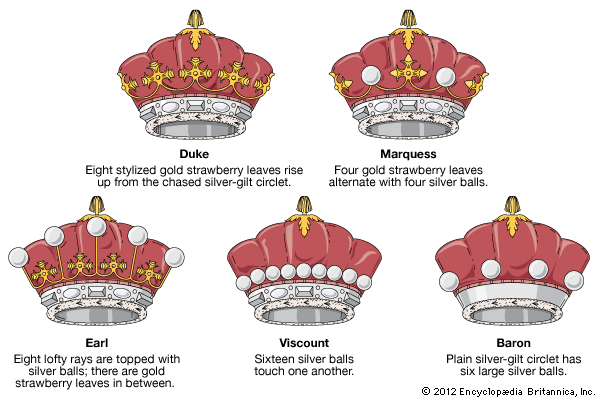
It is currently estimated that the native hereditary nobility in Great Britain – which is not quite the same thing as the “British nobility” – comprises 796 families in all, amounting to fewer than 5,000 people. The statistics for titled families are as follows:
- 24 dukes
- 34 marquesses
- 189 earls
- 110 viscounts
and 439 barons.
The book is divided into thirteen chapters arranged in three parts. Admirers of British culture will appreciate the author’s witty allusions in the chapter titles to works of literature, especially those of Evelyn Waugh: A Handful of Dust, Put Out More Flags, Brideshead Revisited, Vile Bodies, A Little Learning, When the Going Was Good, and Remote People.
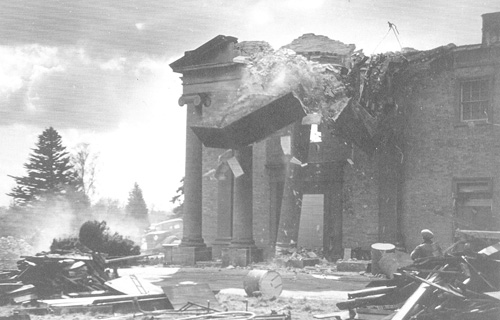
Part One: “The Gentleman’s Estate: Houses and Land” consists of four chapters. This section is dominated by a sombre account of the gradual decline of the great country houses, caused by successive and draconian death duties imposed by left-wing governments from the nineteenth century onwards, and raised still further after the Second World War. Combined with the heavy mortality among members of the British nobility, who fought with such self-sacrifice during the war, these taxes amounted to the partial destruction of the landed world. Unable suddenly to produce millions in tax payments, families sold off their art collections, furniture, and land, until they were forced to sell, or even demolish, historic seats that had been in the same family’s hands for hundreds of years. We encounter the moving stories of those who failed in this struggle and lived out their days burdened by a sense of guilt. Fortunately, we also meet those who succeeded, thanks to innovation and good fortune. After decades of destruction, the state foundation established in 1895, The National Trust for Places of Historic Interest or Natural Beauty – usually referred to simply as The National Trust – was reformed, enabling the gradual acquisition of the finest surviving country houses from an aristocracy driven into a corner, so that museums could be established there and, after years of waste and devastation, priceless monuments preserved. Thinking of these losses, one cannot help recalling the fate of Polish manor houses, palaces, and castles. Sadly, under communism the destruction of such residences was deliberate and systematic, and no foundation was ever created capable of saving even a portion of them. A fortunate few have today become museums of landed or noble culture, preserving what remains of a once rich heritage.
The post-war years were a dark age, in which representatives of ancient families — men who had died in defence of their country and whose families had helped shape its culture for centuries — were regarded, on both sides of the Iron Curtain, as, to quote the book, “selfish, depraved, dissolute and decadent”. Those years are treated in detail in another book which I have reviewed here and warmly recommend.
In Great Britain, a considerable number of these houses remain in private hands — something which, in communist Poland, could not even be dreamt of.
In this section we also encounter the dramatic events, less frequently described in the literature, connected with Ireland’s recovery of independence in the twentieth century. Many British estates in Ireland fell victim at that time to plain banditry: they were robbed, destroyed, and set on fire, while their owners were attacked, kidnapped, and even killed.

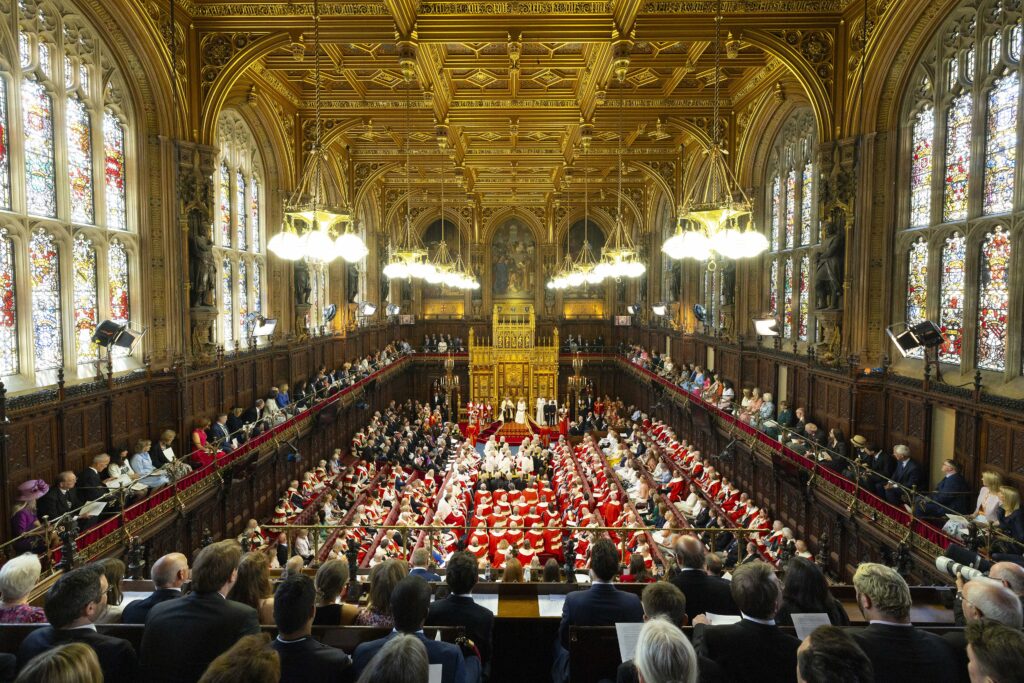
Part Two: “Decline and Fall? Aristocratic Power and Influence” is a fascinating expedition in search of the real influence of the former ruling order. We examine their activity in the traditional bastion of aristocracy, the House of Lords — until the recent, further left-wing “reform”, which this year removed most of the hereditary nobility from the House; this too is discussed in the book — but also the vast and little-known activity of lords in local communities, where they patronise numerous undertakings, financially support valuable initiatives, and chair many local bodies, often linked to their families for centuries. Finally, there is an analysis of the political views of the contemporary nobility in the twentieth and twenty-first centuries. Alongside the conservative views one would naturally expect in this milieu, we find an entire gallery of originals: liberals, socialists, and even communists. We learn, among other things, that votes were not held in the House of Lords during important moments in the hunting season or during major race meetings such as Ascot and Cheltenham. The references to aristocratic careers in colonial countries are particularly interesting. Many aristocrats were responsible for valuable social initiatives, supported the development of local infrastructure, and later assisted native democratic governments in newly independent states.
Part Three: “Officers and Gentlemen: Aristocracy from Cradle to Grave” is the longest part, divided into six chapters. Successive chapters address:
- love lives, marriages, divorces, and affairs;
- efforts to secure the continuity of the family line, “in search of a male heir”;
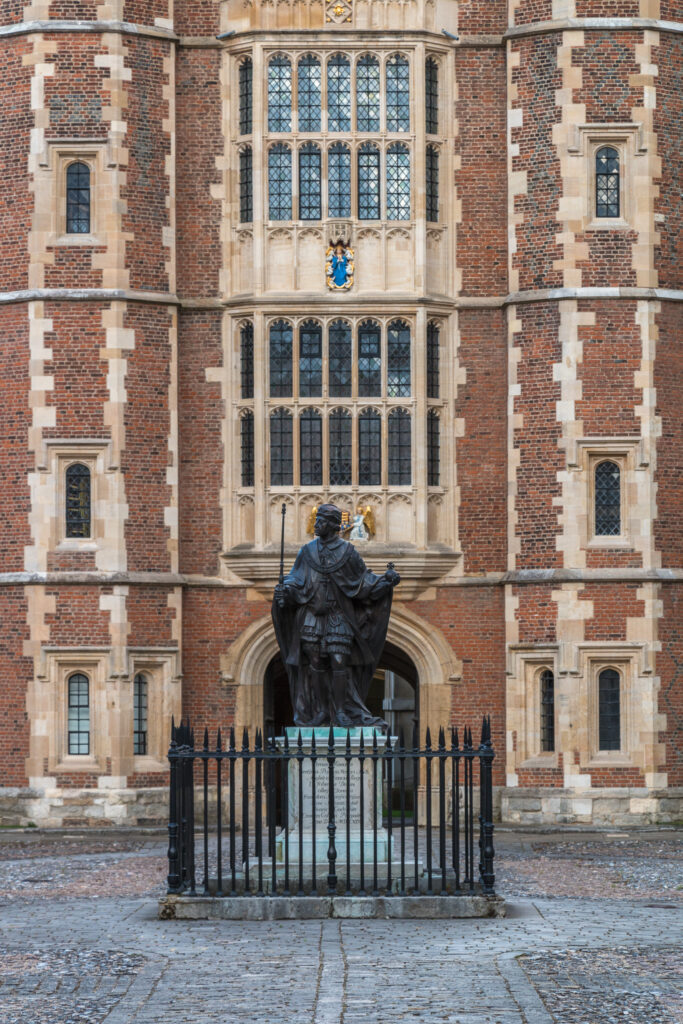
- upbringing and choices of schools for children, together with the whole social aura surrounding the matter;
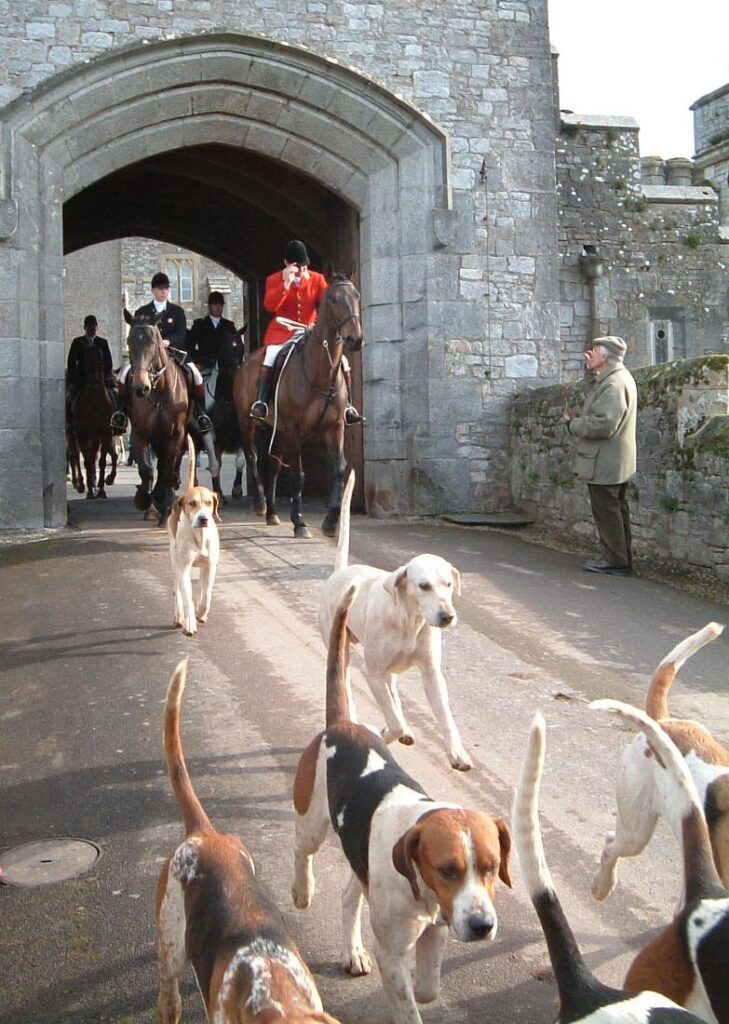
- how aristocrats spend their leisure time;
- the professions pursued by members of noble and aristocratic families, both formerly and today;
- and, finally, the reflections which conclude both this chapter and the whole book: reflections on the aura attached to a title – whether it still radiates upon people or has become merely an archaism. The titled themselves speak on this subject, and it turns out that even among them the matter is far from uniformly perceived. Many aristocrats have an ambivalent attitude towards their familial and estate status; many positively conceal it. Others, in various ways, are proud of it.
Naturally, the book does not omit all that the wider public associates with aristocracy: the particular character of relations with domestic staff, traditional occupations and hobbies, magnificent art collections, though much diminished, and family mementoes with intriguing histories. In the introduction, the author gives a detailed yet highly accessible account of the rules governing the styles and titles used in relation to particular families and their members, including the rules of inheritance and the changes brought about by marriage, divorce, or widowhood, as well as — importantly — the pronunciation of the oldest English, Scottish, and Welsh surnames, which often bears no relation whatever to ordinary English pronunciation. All this splendidly confirms that these are people who are “very far from being People Like Us”.
In interviews, the author speaks about her working method: thousands of index cards and notes, as well as an enormous Excel spreadsheet in which she recorded recollections, interviews, and the surnames and given names of the figures in her book, together with the relationships between them. The world of English, Irish, Welsh, Scottish, and British titles is extraordinarily complicated because of the unusual system under which a title is inherited only by the eldest descendant, usually the son, in the family. In his absence, the title often passes to a distant relative — not infrequently to his utter astonishment. Often in mature life this requires a change of the surname one has borne since birth. It gives rise to amusing, and sometimes dramatic, misunderstandings at passport control and in professional settings.
Although the book is based on very thorough research and furnished with an extensive scholarly apparatus – another reason to praise the author – it is written with fluency and colour, and positively sparkles with anecdotes and vivid, often very candid remarks by representatives of British families, revealing family histories, traumas, and splendid examples of the colour and cultural richness of this milieu.
An important and obvious truth frequently emerges from the conversations. Aristocratic families are, first and foremost, families: people bound closely to one another, still cultivating an ancient model of multi-generational coexistence, as well as a centuries-long relay of generations connected by ties of blood and affection. This is beautifully illustrated by the answer to the author’s question whether a candidate for a title cannot wait to inherit it. The reply is that inheriting a title requires one’s father, the present holder, to die first – and what normal person in a normal family waits for the death of a beloved father?
The gallery of figures painted by the author is full of outstanding individuals, but also perfectly ordinary, even average ones. Those who delight in traits typically associated with aristocracy — eccentricity and extravagance in their many manifestations: flair, courage, self-irony, or plain oddity — will not be disappointed.
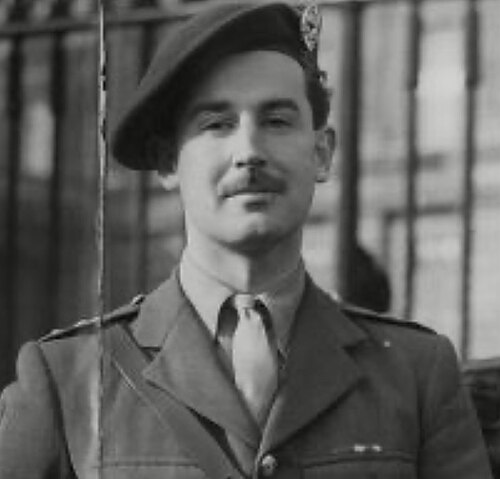
Let us mention just one example of conduct full of both dash and courage. An officer of the Scots Guards, Simon “Shimi” Fraser, 15th Lord Lovat, went down in history for storming the beaches of Normandy on D-Day wearing a white jumper with the word “Lovat” embroidered on the collar, carrying an antique Winchester from the family collection, and accompanied by his private piper, the twenty-one-year-old Bill Millin, whom he ordered to play Scottish battle marches as the two men hurled themselves into a hurricane of German fire. Both survived that infernal assault. Millin recalled that the Germans must have spared him out of pity, taking him for a lunatic and therefore not firing at them. Shimi’s sister said that her brother had been all his life “a traditionalist and a romantic Scottish Highlander”. On his return from the war, he learned of his father’s death and of the draconian death duty payable on the estate. The struggle began to preserve the family seat — a struggle against his own government.
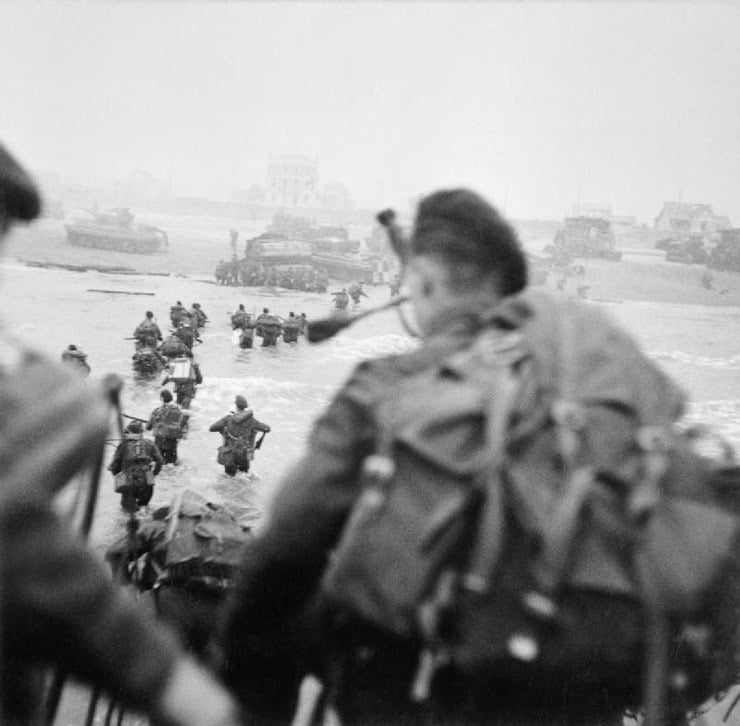
An interesting thread in this male-dominated world is formed by the stories of women belonging to families in which a title may descend through the female line. We also encounter the sad fates of families which, for lack of a male heir, lost everything upon the death of the head of the family and had to begin life literally from nothing, leaving the family home as a new title-holder from some distant branch of the genealogical tree moved in.
The charge made by some reviewers of clearly defined views — that the book is biased because one can sense the author’s sympathy for her subject — should be rejected as itself precisely that: biased. Within the pages of the book we find more than one example of a person hardly fit to serve as a model. One such figure is the 10th Duke of Beaufort, of whose amorous conquests it was said that “embarrassment was not a word that figured in his dictionary”. Of the man himself it was said that, “pumped full of an extraordinarily exalted sense of self-worth and entitlement, he had little truck with good manners”.
The book was published in September 2025. Its success has meant that a paperback edition will appear in June of this year. It is a volume that no connoisseur, nor indeed any amateur, of matters concerning the British nobility and aristocracy should be without. I recommend it most warmly.
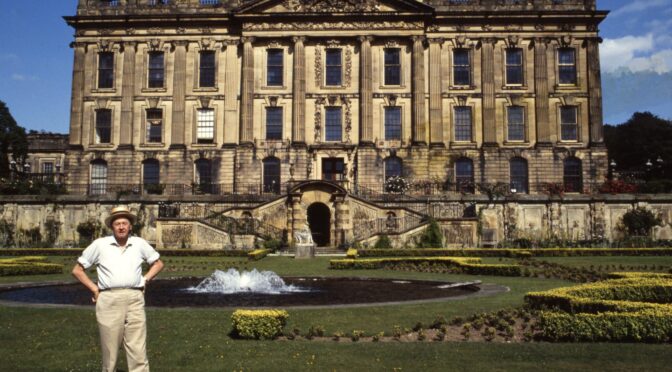
HEADER ILLUSTRATION: The 11th Duke of Devonshire in front of Chatsworth House, 1985. [źródło: Allan Warren, CC BY-SA 3.0, via Wikimedia Commons]